Join Communities in a School
Africa Epicenter Microschool – Grade 6 is a fully online school for students living in African countries, taught in English. Students learn the core subjects, Pan-African history, English as a Foreign Language, French, and Kiswahili or Arabic, with Engolo PE, through AI-adaptive lessons and an AI tutor. $45 a month.
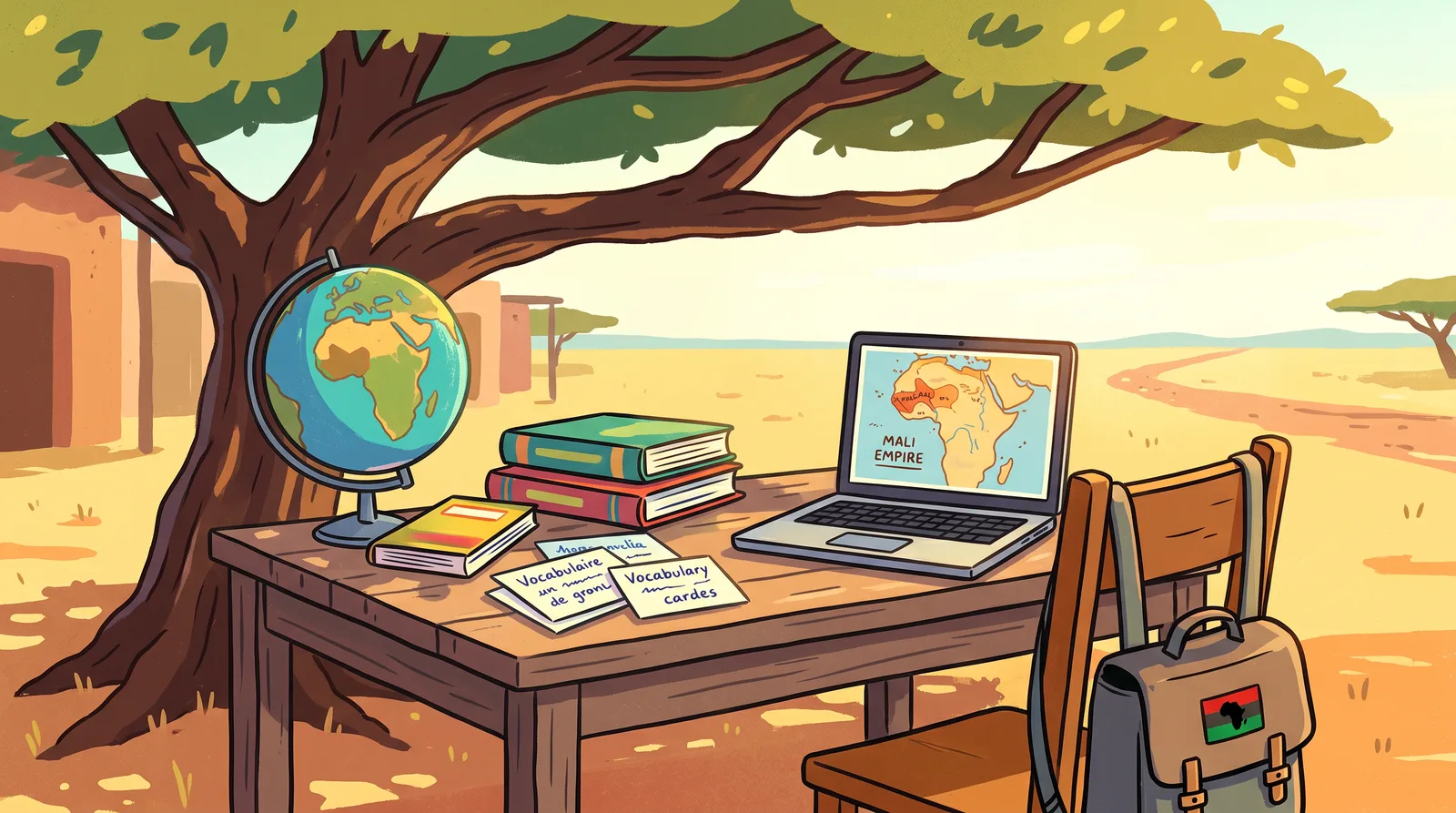
Every student who joins us gains a school that believes in them. We learn many languages, study the whole continent and the wider world, and celebrate every step of progress.
— Dr. Chioma Adaku-Griffin
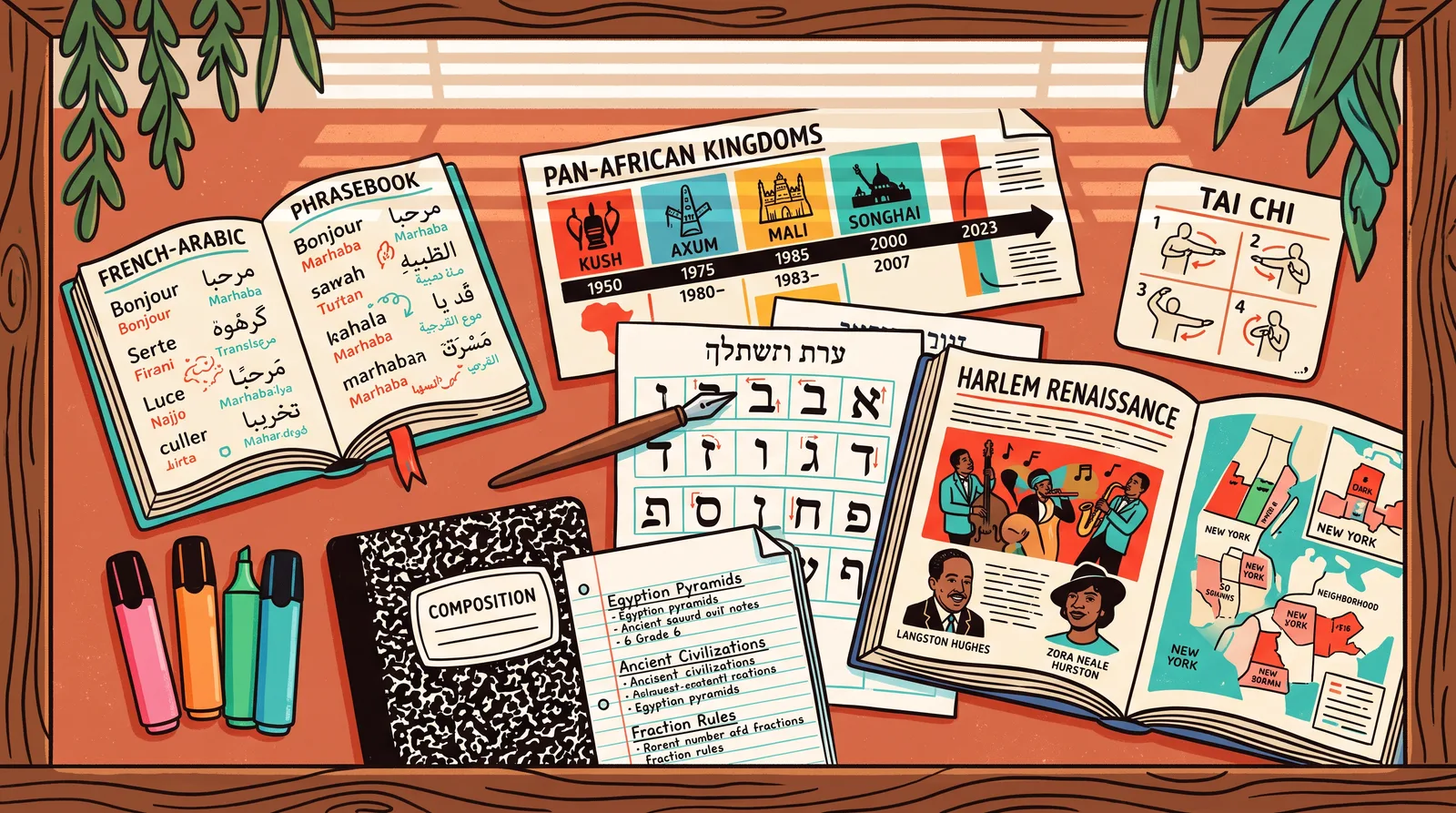
What you'll learn
What you'll be able to do
- Build Grade 6 math skills: sets and Venn diagrams, number bases, fractions, decimals, and ratio and percentage
- Explore Grade 6 science: living things, food chains, the human body, and simple machines
- Read and write English with confidence: the parts of speech, sentences and punctuation, folktales, and narrative writing
- Learn African history, including the cradle of humanity, Kemet, Kush, and Aksum, and American history, including Crispus Attucks, Phillis Wheatley, and Benjamin Banneker
- Communicate at Level 1 in English as a Foreign Language, French, and a chosen second language, Kiswahili or Arabic
- Build technology and business skills: computer basics, online safety, and block programming in Scratch, plus cooperative saving, product design, and pricing for profit
How it works
A school that adapts to you
This isn't a set of static videos. Every lesson is generated live and tuned to where you actually are.
We learn your level
A quick placement check tailors your starting point so you're never bored or lost.
Lessons adapt as you go
Each lesson is written for your pace and your goal, adjusting as your skills grow.
Your AI coach keeps you moving
Checkpoints, feedback, and gentle nudges turn progress into a real result.
The curriculum
What's inside your school
21 modules · 88 lessons
Grade 6 — English Language and Literature
Grade 6 focus: parts of speech, sentences and punctuation, African folktales, and writing a narrative paragraph. Lesson 5 is part of the grades 6–8 Mythology and Folklore of Africa and the Americas unit.
- 1.1The Eight Parts of SpeechIncluded
- 1.2Sentences and PunctuationIncluded
- 1.3African Folktales: The Stories of AnansiIncluded
- 1.4Writing a Narrative ParagraphIncluded
- 1.5Mythology and Folklore Unit: Br'er Rabbit and the Trickster's JourneyIncluded
Grade 6 — French as a Foreign Language (Level 1)
French Level 1 is for grade 6 (CEFR A1, first steps). It is written for English-speaking students who are starting French from zero. Topics: the sounds and spelling of French, meeting people with tu and vous and the verb être, nouns and articles with the verb avoir, and regular -er verbs for saying what you like. Each lesson explains the grammar in English and gives French examples with correct accents.
- 2.1The Sounds of French: Alphabet, Accents, and PronunciationIncluded
- 2.2Meeting People: Greetings, Tu and Vous, and the Verb ÊtreIncluded
- 2.3Nouns, Articles, and the Verb AvoirIncluded
- 2.4Regular -er Verbs: What I Like and What I DoIncluded
Grade 6 — English as a Foreign Language (EFL Level 1)
EFL Level 1 is for grade 6 (about CEFR A1). Topics: greetings, numbers and dates, family and home, and daily routines. Sentences are short on purpose.
- 3.1Hello! Greetings and IntroductionsIncluded
- 3.2Numbers, Days, and MonthsIncluded
- 3.3My Family and My HomeIncluded
- 3.4My Daily RoutineIncluded
Grade 6 — Mathematics
Grade 6 focus (modeled on Liberia's grade 6 mathematics, cross-checked with Ghana B6 and Kenya CBC grade 6): sets and Venn diagrams, number bases, fractions and decimals, and ratio, percentage, and proportion. Lesson 5 is part of the grades 6–8 Ethnomathematics unit.
- 4.1Sets and Venn DiagramsIncluded
- 4.2Number Bases: Base Ten and Base FiveIncluded
- 4.3Fractions and DecimalsIncluded
- 4.4Ratio, Percentage, and ProportionIncluded
- 4.5Ethnomathematics Unit: Patterns in Kente and the Logic of OwareIncluded
Grade 6 — Science
Grade 6 focus (modeled on Liberia's grade 6 science, cross-checked with Ghana B6 Science and Kenya CBC grade 6 Science and Technology): classifying living things, food chains and interdependence, human body systems, and simple machines.
- 5.1Classifying Living ThingsIncluded
- 5.2Food Chains and InterdependenceIncluded
- 5.3The Human Body: Organs and SystemsIncluded
- 5.4Simple Machines and WorkIncluded
Grade 6 — Pan-African History
Grade 6 focus (modeled on Liberia's grades 6–7 social studies history strand, cross-checked with Ghana CCP History B7 and Kenya CBC Social Studies): how we know about the past, human origins in Africa, Kemet (ancient Egypt), and Kush and Aksum.
- 6.1How We Know the Past: Sources and GriotsIncluded
- 6.2Africa: The Cradle of HumanityIncluded
- 6.3Kemet: The Civilization of Ancient EgyptIncluded
- 6.4Kush and Aksum: Kingdoms of the Nile and the Red SeaIncluded
Grade 6 — Civic Education and Social Studies
Grade 6 focus (modeled on Liberia's grade 6 social studies civics strand, cross-checked with Ghana CCP Social Studies and Kenya CBC Social Studies): being a citizen, rights and responsibilities, rules and laws, and the African Union and ECOWAS.
- 7.1What It Means to Be a CitizenIncluded
- 7.2Rights and ResponsibilitiesIncluded
- 7.3Rules, Laws, and Why We Need ThemIncluded
- 7.4Africa Working Together: The AU and ECOWASIncluded
Grade 6 — Geography and Environment of Africa
Grade 6 focus (modeled on Liberia's grade 6 social studies geography strand, cross-checked with Ghana CCP Geography topics and Kenya CBC Social Studies): Africa on the world map, landforms and rivers, climate and vegetation, and Africa's countries and AU regions.
- 8.1Africa on the World MapIncluded
- 8.2Landforms and Rivers of AfricaIncluded
- 8.3Climate and Vegetation ZonesIncluded
- 8.4Africa's 54 Countries and Five AU RegionsIncluded
Grade 6 — Economics
Grade 6 focus (modeled on the economics topics in Liberia's social studies, cross-checked with Ghana CCP Social Studies and Kenya CBC Social Studies and Business Studies): needs and wants, scarcity and choice, the story of money, and saving and budgeting.
- 9.1Needs and Wants, Goods and ServicesIncluded
- 9.2Scarcity, Choice, and Opportunity CostIncluded
- 9.3The Story of MoneyIncluded
- 9.4Saving and BudgetingIncluded
Grade 6 — Computer Technology and AI
Grade 6 focus (modeled on Ghana CCP Computing B7 and Kenya CBC Pre-Technical Studies, with the grades 6–8 Intro to Tech strand): what a computer is and how to organize files, staying safe online, block programming with Scratch, and digital storytelling and what AI is.
- 10.1What Is a Computer? Hardware, Software, and FilesIncluded
- 10.2Staying Safe OnlineIncluded
- 10.3Block Programming with ScratchIncluded
- 10.4Digital Storytelling and What AI IsIncluded
Grade 6 — Second Language Choice: Kiswahili (Level 1)
Grade 6 focus (beginner level 1): greetings and polite words, introducing yourself, numbers 1–20, and classroom objects and colors. Every lesson teaches Kiswahili, which is spoken by tens of millions of people in East and Central Africa and is an official language of the African Union and the East African Community. Kiswahili is written in the Latin alphabet and spelled the way it sounds. Students take either Kiswahili or Arabic as their second language, not both; this is the Kiswahili option, and the Arabic option is a separate class. Every class at the school is taught in English; this course adds Kiswahili.
- 11.1Greetings and Polite WordsIncluded
- 11.2Introducing YourselfIncluded
- 11.3Numbers from 1 to 20Included
- 11.4Classroom Objects and ColorsIncluded
Grade 6 — Second Language Choice: Arabic (Level 1)
Grade 6 focus (modeled on Ghana CCP Arabic, beginner level 1): greetings and polite words, introducing yourself, numbers 1–20, and classroom objects and colors. Every lesson teaches Modern Standard Arabic, with Arabic script and a simple Latin-letter guide. Arabic is an official language in many countries of North Africa and the Horn of Africa and one of the six official languages of the United Nations. Students take either Kiswahili or Arabic as their second language, not both; this is the Arabic option, and the Kiswahili option is a separate class. Every class at the school is taught in English; this course adds Arabic.
- 12.1Greetings and Polite WordsIncluded
- 12.2Introducing YourselfIncluded
- 12.3Numbers from 1 to 20Included
- 12.4Classroom Objects and ColorsIncluded
Grade 6 — Agriculture and Food Science
Grade 6 focus (modeled on the agriculture topics in Liberia's general science and social studies, cross-checked with Ghana B6 Science and Kenya CBC Agriculture and Nutrition): why farming matters in Africa, soil types, growing a crop from seed, and food groups and keeping food safe.
- 13.1Why Farming Matters in AfricaIncluded
- 13.2Soil: The Living GroundIncluded
- 13.3Growing a Crop from SeedIncluded
- 13.4Food Groups and Keeping Food SafeIncluded
Grade 6 — Values, Ethics, and Moral Education
Grade 6 focus (non-sectarian; modeled on the shared values in Liberia's and Ghana's Religious and Moral Education and Kenya CBC values, without teaching any one faith): respect and kindness, honesty and responsibility, resolving conflicts peacefully, and African proverbs and ubuntu.
- 14.1Respect and KindnessIncluded
- 14.2Honesty and ResponsibilityIncluded
- 14.3Resolving Conflicts PeacefullyIncluded
- 14.4African Proverbs and UbuntuIncluded
Grade 6 — American History
Grade 6 focus: African roots, Black freedom fighters of the American Revolution, early Black pioneers, and the Liberia connection. U.S. founding events appear only as context for the Black American story.
- 15.1African Roots: Where Black Americans Come FromIncluded
- 15.2Black Freedom Fighters of the American RevolutionIncluded
- 15.3Early Black Pioneers: Attucks, Wheatley, and BannekerIncluded
- 15.4The Liberia Connection: From America to West AfricaIncluded
Grade 6 — Music Appreciation
Grade 6 focus (modeled on Liberia's Music and Culture curriculum, cross-checked with the Ghana CCP and Kenya CBC arts curricula): the elements of music, African instruments, Liberia's national anthem and West African songs, and how to listen to and write about music. This course does not repeat grade 11 American History, which covers the history of Black American music genres.
- 16.1The Elements of MusicIncluded
- 16.2African Instruments and How They Make SoundIncluded
- 16.3National Anthems and West African SongsIncluded
- 16.4Listening to and Writing About MusicIncluded
Grade 6 — Art History
Grade 6 focus (modeled on the arts and culture strand of Liberia's Music and Culture curriculum, cross-checked with Ghana CCP arts and design curriculum and Kenya CBC Visual Arts): how to look at art, ancient African rock art and Nok terracottas, Kente cloth, and Ndebele house painting. Hands-on making is in Studio Arts and Textile Design; this course focuses on history and looking.
- 17.1How to Look at ArtIncluded
- 17.2Ancient African Art: Rock Art and Nok TerracottasIncluded
- 17.3Kente: The Royal Cloth of GhanaIncluded
- 17.4Ndebele House Painting and Esther MahlanguIncluded
Grade 6 — STEM (Science, Technology, Engineering, and Mathematics)
Grade 6 focus (modeled on the Liberia General Science and Mathematics curricula, cross-checked with Ghana CCP Science and Kenya CBC Integrated Science and Pre-Technical Studies): the engineering design process, structures (a paper bridge), a water filter model, and an investigation of plant growth with a graph. All projects use low-cost home materials.
- 18.1Thinking Like an Engineer: The Engineering Design ProcessIncluded
- 18.2Structures and Forces: Build a Paper BridgeIncluded
- 18.3Clean Water Engineering: Build a Water Filter ModelIncluded
- 18.4Investigating Plant Growth: Data and GraphsIncluded
Grade 6 — Entrepreneurship and Wealth Building: The Young Entrepreneur
Grade 6 focus (modeled on the economics and work-skills strands of Liberia's Social Studies curriculum, cross-checked with Ghana CCP Career Technology and Kenya CBC Business Studies): what an entrepreneur is, Ujamaa (cooperative economics) and susu savings groups, product design, and cost, price, and profit, ending with a micro-market project. Grades 6–8 band: The Young Entrepreneur.
- 19.1What Is an Entrepreneur?Included
- 19.2Ujamaa and Susu: Cooperative EconomicsIncluded
- 19.3Designing a Product People WantIncluded
- 19.4Cost, Price, and Profit: The Micro-Market ProjectIncluded
Grade 6 — Studio Arts and Textile Design
Grade 6 focus (modeled on the arts strand of Liberia's Music and Culture curriculum, cross-checked with Ghana CCP arts and design curriculum and Kenya CBC Visual Arts): the Kuumba principle and the elements of design, adinkra stamping (printmaking), upcycled sculpture, and Kente-style paper weaving. All projects use low-cost home materials. Art history background is in the Art History course; this course is hands-on making.
- 20.1Kuumba and the Elements of DesignIncluded
- 20.2Adinkra Stamping: Printmaking with SymbolsIncluded
- 20.3Upcycled Sculpture: Art from Found ObjectsIncluded
- 20.4Textile Design: Kente-Style Paper WeavingIncluded
Grades 6–12 — Physical Education: Engolo Movement and Fitness
One shared optional class for Grades 6–12. At-home movement based on Engolo, the Angolan martial art and dance linked to capoeira, plus mobility, stretching, breathwork, and plant-based nutrition. Movement, breathing, and nutrition only. No partner contact. Grades 6–8 use beginner-safe videos only.
- 21.1Engolo: Angola's Zebra DanceIncluded
- 21.2Warm Up and Learn the Swing StepIncluded
- 21.3Escape, Don't Block: Dodges and Low MovementIncluded
- 21.4The Circle: Music, Respect, and PlayIncluded
- 21.5Mobility, Stretching, and Breathwork (Umoya)Included
- 21.6Traditional and Plant-Based Nutrition for Active BodiesIncluded
Who it's for
Is this you?

The Curious Explorer
She asks big questions about the past and wants to study the cradle of humanity, Kemet, Kush, and Aksum in depth.
The Language Builder
He speaks one or two languages at home and is ready to build his English, learn French, and choose Kiswahili or Arabic.

The Young Maker
She loves to build and create, and she is excited for hands-on STEM projects and a computer class covering computer basics, online safety, and block programming in Scratch.

The Family on the Move
Their work takes them from one African country to another, and they want one steady school their children can follow anywhere.

The Parent Seeking More
He wants a rigorous, well-organized school that teaches the core subjects and celebrates the whole continent.

The Active Learner
She learns best when study is balanced with movement, and she looks forward to Engolo PE.
Questions
Frequently asked
Your teacher
A note from your teacher
Dr. Chioma Adaku-Griffin
Welcome to Africa Epicenter Microschool. I started this school because I believe every student across Africa deserves a rigorous education that celebrates the whole continent and prepares them for the wider world.
In Grade 6, your student takes 19 classes, from English, mathematics, and science to economics, music, and art. Students study Pan-African history, strengthen their English through English as a Foreign Language, learn French at Level 1, and choose Kiswahili or Arabic, with Engolo PE to keep body and mind active.
Every lesson adapts to your student. An AI tutor explains new ideas, answers questions at any hour, and adjusts the pace, and every lesson ends with a short quiz. Essays and projects let students show what they can really do.
Students of every background, language, and faith are welcome here. If you are looking for a school that is serious about learning and generous in spirit, I would be honored to have your student join our community this year.
— Dr. Chioma Adaku-Griffin
Start your journey today
Get instant access — learn at your own pace with an AI coach in your corner.
$45/mo
Recurring billing · cancel anytime
Secure checkout · Instant access
- 21 modules, 88 lessons
- AI-adaptive lessons tuned to your level
- Quizzes & checkpoints to lock in progress
- Your own AI learning coach
- Learn on any device, at your pace
- Full access for as long as you're subscribed